
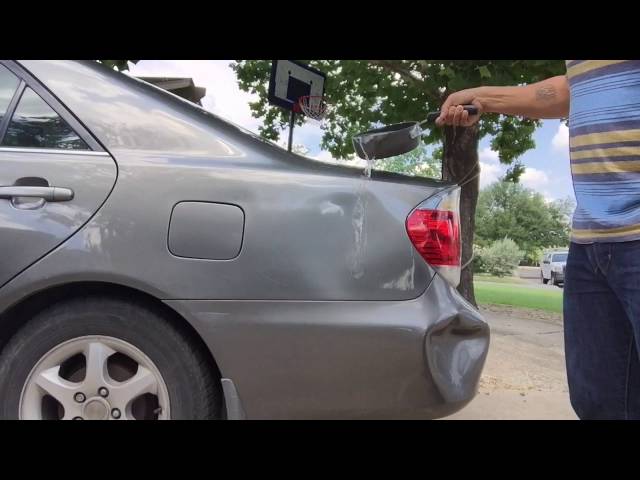
How To Repair Dent In Car
Dent repair, a specialized automotive service, involves restoring a vehicle's body to its original condition after it has sustained a dent or crease. These dents can occur due to various reasons such as collisions, accidental impacts, or hail damage. The repair process aims to remove the dent without affecting the car's paint or overall structure.
Dent repair not only enhances the aesthetic appearance of a vehicle but also maintains its value. A well-maintained car with a dent-free body commands a higher resale value compared to one with visible dents. Additionally, dents, if left unrepaired, can lead to further damage to the car's bodywork over time due to moisture accumulation and corrosion.
There are several techniques used in dent repair, including paintless dent removal (PDR) and conventional bodywork methods. PDR is a specialized technique that involves using specialized tools to access the Rckseite of the dent and gently pushing it out without affecting the paint. This method is suitable for dents that do not have sharp creases or deep scratches. Conventional bodywork methods, on the other hand, involve removing the damaged body panel, repairing or replacing it, and then repainting the affected area. This method is typically used for more severe dents or when PDR is not feasible.
Dent Repair
Dent repair, a crucial automotive service, involves restoring a vehicle's body to its original condition after sustaining a dent or crease. To comprehensively understand this process, it's essential to explore its key aspects:
- Assessment: Evaluating the severity and location of the dent determines the appropriate repair technique.
- Tools and Equipment: Specialized tools, such as PDR rods and hammers, are used for precise dent removal.
- Techniques: Paintless Dent Removal (PDR) and conventional bodywork methods are the primary techniques used, depending on the dent's characteristics.
- Materials: High-quality body fillers and paints are crucial for seamless repairs that match the original finish.
- Skill: Experienced technicians with a keen eye for detail ensure the highest quality repairs.
- Cost: The repair cost varies depending on the size, location, and severity of the dent.
- Prevention: Proper parking techniques and protective measures can help prevent dents in the future.
These aspects are interconnected and play vital roles in the dent repair process. Accurate assessment enables technicians to select the most suitable technique, while the right tools and materials ensure precise and durable repairs. Skilled technicians leverage their expertise to achieve seamless results, ultimately restoring the vehicle's appearance and value. Understanding these aspects empowers car owners to make informed decisions regarding dent repair and maintain their vehicles in pristine condition.
Assessment
In the context of dent repair, assessment plays a pivotal role in determining the most effective repair technique. A comprehensive assessment involves evaluating the severity and location of the dent to ascertain its depth, size, and position on the vehicle's body. This evaluation process is crucial as it directly influences the choice of repair technique, ensuring optimal results.
For instance, a minor dent with a shallow depth and no sharp creases may be suitable for Paintless Dent Removal (PDR). PDR is a specialized technique that involves using specialized tools to access the Rckseite of the dent and gently pushing it out without affecting the paint. This technique is often preferred for smaller dents as it preserves the original factory finish and maintains the vehicle's value.
On the other hand, more severe dents with sharp creases or deep scratches may require conventional bodywork methods. These methods involve removing the damaged body panel, repairing or replacing it, and then repainting the affected area. While more invasive than PDR, conventional bodywork methods are necessary to restore the vehicle's body to its pre-damaged condition.
Understanding the connection between assessment and repair technique is essential for achieving successful dent repair outcomes. By carefully evaluating the dent's severity and location, technicians can determine the most appropriate technique, ensuring a high-quality repair that restores the vehicle's appearance and value.
Tools and Equipment
In the realm of dent repair, specialized tools and equipment play a pivotal role in achieving precise and effective repairs. PDR rods and hammers, specifically designed for Paintless Dent Removal (PDR), are essential tools that enable technicians to access and manipulate dents from the Rckseite without damaging the vehicle's paint or finish.
- Precision and Control: PDR rods and hammers provide exceptional precision and control, allowing technicians to carefully massage and push out dents, restoring the vehicle's body to its original shape.
- Access to Hard-to-Reach Areas: PDR rods are designed with varying lengths and angles, enabling technicians to access even the most intricate areas of a vehicle's body, ensuring comprehensive dent removal.
- Minimal Intrusion: Unlike conventional bodywork methods that involve cutting and welding, PDR techniques utilize specialized tools that minimize intrusion into the vehicle's body, preserving its structural integrity and original finish.
- Cost-Effective and Time-Saving: PDR is a relatively cost-effective and time-saving repair method compared to traditional bodywork, making it an attractive option for both minor and major dent repairs.
The connection between specialized tools and equipment and the overall process of "how to repair dent in car" is evident in the ability of these tools to facilitate precise and effective dent removal. PDR techniques, utilizing specialized rods and hammers, offer a minimally invasive and cost-effective solution, preserving the vehicle's original finish and structural integrity while restoring its aesthetic appeal.
Techniques
In the context of "how to repair dent in car," the choice of repair technique hinges on the nature and severity of the dent. Two primary techniques are commonly employed: Paintless Dent Removal (PDR) and conventional bodywork methods.
-
Facet 1: Paintless Dent Removal (PDR)
PDR is a specialized technique that involves accessing the Rckseite of the dent using specially designed tools and gently massaging it out. This method is ideal for minor dents with shallow depth and no sharp creases, as it preserves the original paint finish and maintains the vehicle's value.
-
Facet 2: Conventional Bodywork Methods
Conventional bodywork methods involve removing the damaged body panel, repairing or replacing it, and repainting the affected area. This technique is necessary for more severe dents with sharp creases or deep scratches, as it allows for comprehensive repairs and restoration of the vehicle's body to its pre-damaged condition.
The connection between these techniques and "how to repair dent in car" lies in their effectiveness in addressing different types of dents. PDR offers a minimally invasive and cost-effective solution for minor dents, while conventional bodywork methods provide a more comprehensive repair for severe dents. Understanding the characteristics of the dent and selecting the appropriate technique are crucial for achieving optimal repair outcomes and restoring the vehicle's appearance and value.
Materials
In the realm of dent repair, the quality of materials used plays a pivotal role in achieving seamless repairs that restore the vehicle's original appearance and value. High-quality body fillers and paints are essential components that contribute to the overall success of the repair process.
-
Facet 1: Body Fillers
Body fillers are applied to fill in dents and imperfections, creating a smooth surface for painting. The quality of the body filler determines its durability, adhesion to the metal surface, and ability to withstand various environmental conditions. High-quality body fillers ensure a strong and lasting repair that prevents the dent from reappearing over time.
-
Facet 2: Paints
Paints used in dent repair must match the original color and finish of the vehicle to achieve a seamless blend. High-quality paints resist fading, chipping, and peeling, ensuring a long-lasting and aesthetically pleasing repair. The expertise of the technician in paint mixing and application is also crucial for achieving a perfect color match and preserving the vehicle's original appearance.
-
Facet 3: Clear Coat
A clear coat is applied over the paint to protect it from environmental damage, such as UV rays and moisture. High-quality clear coats provide a glossy and durable finish that enhances the vehicle's appearance and protects the underlying paint from scratches and wear.
-
Facet 4: Primers
Primers are applied before painting to enhance the adhesion of the paint to the metal surface. High-quality primers promote a strong bond between the paint and the metal, ensuring the longevity of the repair and preventing premature paint failure.
The connection between high-quality materials and successful dent repair is evident in the ability of these materials to restore the vehicle's original appearance and protect it from further damage. By utilizing top-of-the-line body fillers, paints, clear coats, and primers, technicians can achieve seamless repairs that match the original finish and maintain the vehicle's value.
Skill
In the context of dent repair, the skill and experience of the technician play a pivotal role in determining the quality and outcome of the repair. Experienced technicians possess a keen eye for detail, enabling them to assess the severity of the dent, select the appropriate repair technique, and execute the repair with precision.
The connection between "Skill: Experienced technicians with a keen eye for detail ensure the highest quality repairs" and "how to repair dent in car" lies in the direct impact that the technician's skill has on the overall repair process. A skilled technician can achieve seamless repairs that are virtually undetectable, preserving the vehicle's original appearance and value. Conversely, a lack of skill or experience can result in subpar repairs that may compromise the vehicle's aesthetics and structural integrity.
For instance, in Paintless Dent Removal (PDR), a skilled technician can expertly manipulate the dent from the Rckseite, gently massaging it out without damaging the paint or finish. This requires a high level of precision and dexterity to ensure that the dent is completely removed without causing any additional damage. Similarly, in conventional bodywork methods, a skilled technician can expertly blend the repaired area with the surrounding body panels, ensuring a seamless transition and maintaining the vehicle's original contours.
Understanding the connection between the skill of the technician and the quality of the dent repair is crucial for car owners who seek the highest quality repairs for their vehicles. By entrusting their vehicles to experienced and skilled technicians, car owners can be assured of a professional repair that restores the vehicle's appearance, maintains its value, and ensures its structural integrity.
Cost
The cost of dent repair is directly connected to the extent of the damage, encompassing factors such as the size, location, and severity of the dent. These elements collectively influence the complexity of the repair process and the materials and techniques required to restore the vehicle's body to its original condition.
For instance, a minor dent on a flat body panel may require a simple Paintless Dent Removal (PDR) technique, which involves gently pushing out the dent from the Rckseite without affecting the paint finish. This method is less time-consuming and requires fewer materials, resulting in a lower repair cost.
Conversely, a large dent on a curved body panel may necessitate conventional bodywork methods. This involves removing the damaged panel, repairing or replacing it, and repainting the affected area. The complexity of the repair process, the need for specialized tools and materials, and the labor-intensive nature of the work contribute to a higher repair cost.
Understanding the connection between the cost of dent repair and the extent of the damage empowers car owners to make informed decisions regarding the repair process. By considering the size, location, and severity of the dent, they can have realistic expectations about the associated repair costs and plan accordingly.
Prevention
Prevention plays a crucial role in mitigating the need for dent repair by minimizing the risk of dents occurring in the first place. Proper parking techniques and protective measures serve as proactive steps car owners can take to safeguard their vehicles from potential damage.
-
Facet 1: Proper Parking Techniques
Choosing appropriate parking spaces, avoiding tight maneuvers, and maintaining a safe distance from other vehicles can significantly reduce the likelihood of dents caused by accidental collisions or door dings. Utilizing parking aids such as sensors or cameras enhances situational awareness and assists drivers in navigating parking spaces with greater precision.
-
Facet 2: Protective Measures
Employing protective measures such as car covers, seat covers, and steering wheel covers shields the vehicle's exterior and interior from potential damage. These covers act as barriers against environmental factors like hail, bird droppings, and dust, and they can also prevent scratches and scuffs caused by everyday use.
Understanding the connection between prevention and dent repair empowers car owners to take an active role in preserving their vehicles' pristine condition. By adopting proper parking techniques and implementing protective measures, they can minimize the likelihood of dents, saving themselves the time, expense, and hassle associated with dent repair.
Frequently Asked Questions about "How to Repair Dent in Car"
This section addresses common questions and misconceptions surrounding dent repair, providing clear and informative answers to empower car owners with the knowledge they need to make informed decisions.
Question 1: Can I repair a dent in my car myself?
While DIY dent repair kits and tutorials are available, it is generally recommended to entrust dent repair to experienced technicians. Professional technicians possess the specialized tools, skills, and experience necessary to achieve optimal results, ensuring a seamless repair that matches the original factory finish and maintains the vehicle's value.
Question 2: What is the difference between Paintless Dent Removal (PDR) and conventional bodywork methods?
PDR involves accessing the dent from the Rckseite and gently pushing it out without affecting the paint finish. This method is suitable for minor dents with shallow depth and no sharp creases. Conventional bodywork methods, on the other hand, involve removing the damaged body panel, repairing or replacing it, and repainting the affected area. This method is typically used for more severe dents or when PDR is not feasible.
Question 3: How much does it cost to repair a dent in my car?
The cost of dent repair varies depending on several factors, including the size, location, and severity of the dent, as well as the repair method used. Minor dents may cost a few hundred dollars to repair, while larger or more complex dents can cost upwards of a thousand dollars.
Question 4: Can dents affect the value of my car?
Unrepaired dents can negatively impact a car's value, especially if they are visible or located in prominent areas. A well-maintained car with a dent-free body commands a higher resale value compared to one with visible dents.
Question 5: How can I prevent dents in my car?
Proper parking techniques, such as choosing appropriate parking spaces and maintaining a safe distance from other vehicles, can help prevent dents. Additionally, using protective measures like car covers and parking in covered areas can shield the vehicle from environmental factors and potential damage.
Question 6: When should I seek professional help for dent repair?
It is advisable to seek professional help for dent repair in cases where the dent is large, deep, or has sharp creases. Attempting to repair such dents without proper skills and equipment can lead to further damage or a subpar repair.
Summary of key takeaways or final thought
Understanding the nuances of dent repair and its impact on a car's value empowers car owners to make informed decisions regarding the repair process. By seeking professional help when necessary and adopting preventive measures, car owners can maintain their vehicles in pristine condition and preserve their value.
Transition to the next article section
This concludes the frequently asked questions section. For further information or guidance on dent repair, consult with a reputable automotive service provider or refer to additional resources on the subject.
Tips to Repair Dents in Cars
Dent repair is a crucial aspect of maintaining a vehicle's appearance and value. Here are several tips to effectively repair dents:
Tip 1: Assess the Dent's Severity and Location
Carefully examine the dent to determine its size, depth, and location. This assessment helps in selecting the appropriate repair technique, whether Paintless Dent Removal (PDR) or conventional bodywork methods.
Tip 2: Choose a Reputable Repair Shop
Opt for a reputable automotive service provider with experienced technicians and a proven track record in dent repair. Their expertise ensures a high-quality repair that restores the vehicle's original condition.
Tip 3: Utilize Specialized Tools and Techniques
PDR involves using specialized tools to gently push the dent out from the Rckseite without damaging the paint. Conventional bodywork methods require removing the damaged panel, repairing or replacing it, and repainting the area.
Tip 4: Select High-Quality Materials
Ensure the use of high-quality body fillers, paints, and primers to achieve a seamless repair that matches the original finish. This contributes to the durability and longevity of the repair.
Tip 5: Prevent Future Dents
Adopt preventive measures such as proper parking techniques, using car covers, and installing parking sensors to minimize the risk of future dents and preserve the vehicle's appearance.
Summary of key takeaways or benefits
By following these tips, car owners can effectively repair dents, maintain their vehicles in pristine condition, and preserve their value.
Transition to the article's conclusion
Dent repair is an essential aspect of car maintenance. By adhering to these tips, car owners can ensure professional and high-quality repairs that restore their vehicles to their pre-damaged condition.
Conclusion on "How to Repair Dent in Car"
Dent repair is a vital aspect of maintaining a vehicle's aesthetic appeal and value. Understanding the techniques, materials, and processes involved empowers car owners to make informed decisions regarding the repair of dents. By seeking professional assistance when necessary, utilizing appropriate repair methods, and adopting preventive measures, car owners can effectively restore their vehicles to their pre-damaged condition and preserve their long-term value.
Remember, regular maintenance and timely repairs not only enhance a car's appearance but also contribute to its overall safety and performance. By adhering to the principles outlined in this article, car owners can ensure the longevity and integrity of their vehicles, ensuring a smooth and enjoyable driving experience for years to come.
Youtube Video:
Post a Comment for "How To Repair Dent In Car"